
From chest imaging to MSK, more than two thousand patients have benefited from expanded access to care
Waterloo, Oct 01, 2025 – More than two thousand patients have been imaged in the first year since the Reveal 35C detector, paired with a portable source, was installed at the Village of Hope Hospital in Kenya. In a report released in early September, the team using the device reflected on its impact on patient care in the region.
X-ray imaging was performed both at the main facility and through outreach at itinerant medical camps.

“Since the installation of the digital X-ray machine, Village of Hope Hospital has played a crucial role in serving the surrounding counties, as none of the hospitals nearby has a working X-ray machine,” said Brandy Jeruto, radiographer at the hospital and one of the authors of the report. “Patients in rural or underserved areas have access to fast and high-quality imaging services, while saving money by avoiding travel. As most people here come from low-income families, this has really reduced travel costs, as most would have been forced to delay care,” she said.
The Village of Hope Hospital serves primarily three counties – Uasin Gishu, Nandi, and Kakamega. According to data from the 2019 census, the population of these counties nears 4 million people – or 8% of Kenya’s population.
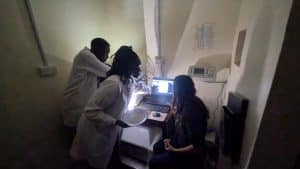
The Reveal system was installed with the initial goal of supporting early identification of tuberculosis, and 30% of the X-rays in the first year were for chest and thorax. Over time, other applications emerged as relevant in the area, notably musculoskeletal (MSK) imaging – 43% of all X-rays performed in the first year were of upper or lower limbs.
“The orthopaedic department has really grown because we now run the department 24 hours a day, 7 days a week,” said Jeruto. “We have been able to do 35 orthopaedic surgeries over the past year,” she said.
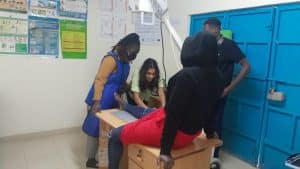
Dr. Methuselah Korir, trauma surgeon who supports the Village of Hope Hospital, emphasized this need: “There is a huge demand for orthopedic care. There are very few surgeons in this region of the world,” he said.
Many cases are complex. Last year, for example, the hospital received a patient after a traffic accident with bilateral femur fractures – a lesion known to be life-threatening, with high risk of complications and permanent disability. Surgery was performed, with bilateral femur nailing done. “The patient can walk again,” noted Jeruto.
“The previous system was fixed, so positioning the patient was difficult. Image clarity was not very good, so we could end up requesting CT scans—which were not available in the hospital. They had to be transferred to another facility so we could clearly determine what kind of injury they had and then plan the surgery accurately. But transporting patients is a problem on its own, especially if you have trauma patients,” said Dr. Korir.
After the hospital received the Reveal 35C system, the process became much easier. “We get our images very fast, and we can get any view we want. The image quality and clarity are very good. The images I’m getting now provide more information than what I could get initially. Once you have the soft tissue and the bone, you can diagnose subtle pathology that you couldn’t detect with standard X-rays,” he said.
In remote areas where advanced modalities are not readily available, any additional insight can significantly affect patient outcomes.
“Healthcare disparities are still a global issue,” said Dr. Karim S. Karim, CTO of KA Imaging, who supported the on-site installation and training. “Expanding access to better imaging, even in remote areas, can lead to earlier intervention and better outcomes.”
“That’s always been a goal for KA Imaging, and we’re proud to see such a meaningful impact,” said Amol Karnick, President and CEO of KA Imaging.
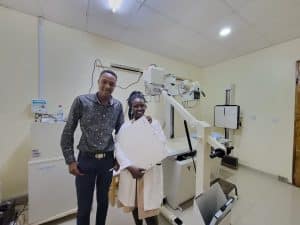
“Kenyan Kids Foundation Canada (KKFC), which raised the funds for this project, is delighted that the Reveal 35C system has performed so well and enabled the Village of Hope Hospital to provide high-quality X-ray images to thousands of patients in the first year of operation,” said Blair McKay, KKFC Chair. “Both KA Imaging and Village of Hope staff deserve a great deal of credit for the early and ongoing success of this life-changing project,” he concluded.
Online donations to support this initiative can be made through KKFC’s website: https://www.kenyankidsfoundation.ca/kax
About KA Imaging
A spin-off from the University of Waterloo, KA Imaging specializes in developing innovative X-ray imaging technologies and systems, providing solutions to the medical, veterinary, and non-destructive testing industrial markets.
About KKFC
KKFC is a registered Canadian charity based in St. Clements, Ontario. The institution’s mandate is to relieve poverty in Kenya by helping people to become more self-sufficient in the areas of education, health, and well-being. Most of their efforts are focused on the Cherangany region, a remote location that faces many challenges. The hundreds of thousands of people that live in the area lack basic infrastructure like access to roads, schools, and medical care.